Open to research software & ML roles

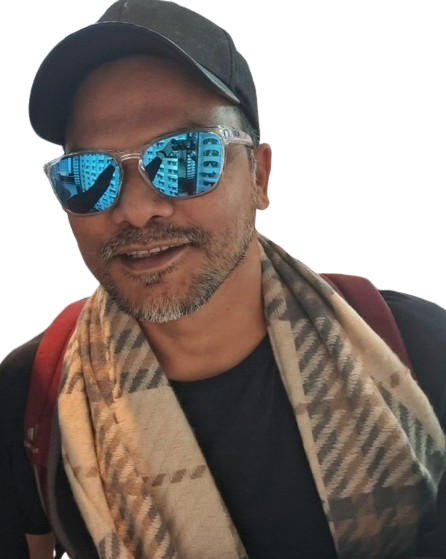
Janmajay Kumar

Physicist who builds research software.

I work where a hard numerical problem meets code that other people have to run: neural operators for simulation, machine learning on measurement data, and the pipelines and validation around both. Currently finishing a doctorate at the University of Tübingen.

A model that works is not a model that is understood — and the gap between the two is where the interesting problems live.

Python PyTorch C++ GEANT4 HPC / GPU FastAPI Neo4j Docker
Janmajay Kumar

What I'm doing now

since 2022

Doctoral research — neural operators

University of Tübingen, Theoretical Physics. Research complete, dissertation in writing.

since 2026

Doppler lidar wind retrievals

Machine learning on remote-sensing data — joint project with the German Weather Service (DWD).

ongoing

German to C1

B2 now, C1 examination in December 2026. English is my working language.

Simulation & scientific ML

Research

All repositories →
Fourier neural operator

neuralFRG

The full codebase behind my doctoral research — public so the results can be reproduced. A classical solver validated against published reference values across four universality classes, parallelised data generation on HPC clusters, and a Fourier Neural Operator that maps initial conditions to full solution trajectories.

I also published the failure of the naive physics-informed approach — 25–52 % error — as a standalone result with its cause, rather than tuning until it looked acceptable.

PyTorch HDF5 HPC
Monte Carlo transport

GEANT4 neutron capture

Standalone C++ simulation for the water Cherenkov veto of the LEGEND neutrinoless double beta decay experiment. Neutron thermalisation and capture in gadolinium-doped water, with run-time material switching and thermal scattering treatment.

Reproduces the accepted ~85–90 % gadolinium capture share at 0.1 wt % and fed a detector design parameter. ROOT output, Python analysis layer, Dockerfile for reproducible builds.

C++ CMake ROOT Docker
Remote sensing · in progress

Doppler lidar wind retrievals

Joint project with the German Weather Service correcting systematic error in lidar wind measurements: 600,000+ records across several independently operated instruments and locations, seven model families benchmarked under Bayesian hyperparameter search.

Validated with spatial leave-location-out cross-validation rather than random splits, then tested for transfer to a second instrument operated by a different group. Per-prediction uncertainty via quantile regression.

scikit-learn Optuna pandas

Publication in preparation — code not yet public.

Shipped and running

Software

See all →
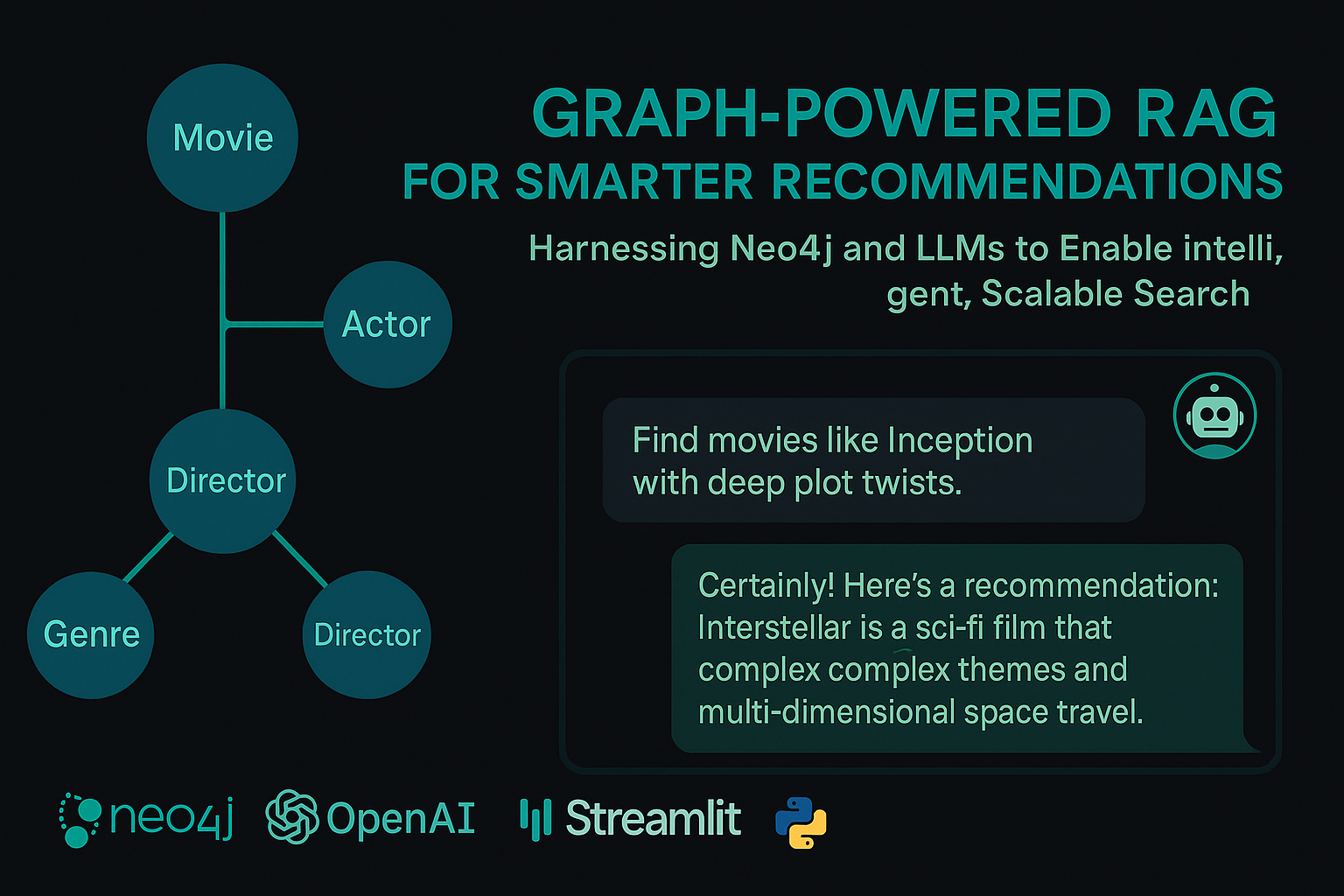
CineBot graph-aware retrieval interface

CineBot

live

Multimodal retrieval over text and images: visual identification from posters with CLIP, semantic retrieval over plots and reviews, and a Neo4j knowledge graph connecting queries to entities. Prototyped in Streamlit, rebuilt with FastAPI and React/TypeScript, deployed on a server I administer.

Neo4j LangChain FastAPI React
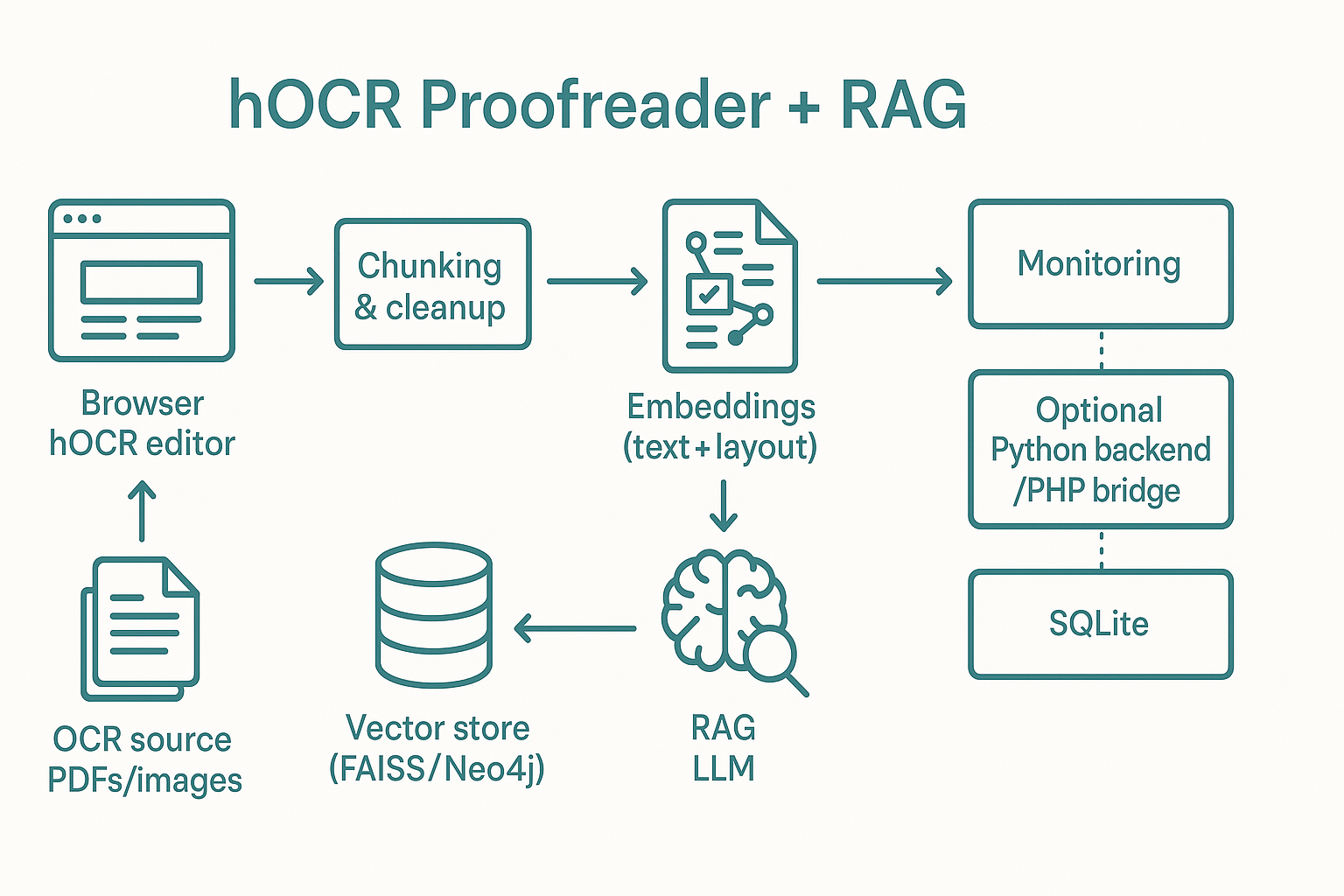
hOCR proofreading editor

hOCR proofreader + RAG

Browser editor for OCR-scanned pages with chunking, embeddings and document question answering, served by a custom Python HTTP layer behind a PHP bridge.

Python PHP RAG
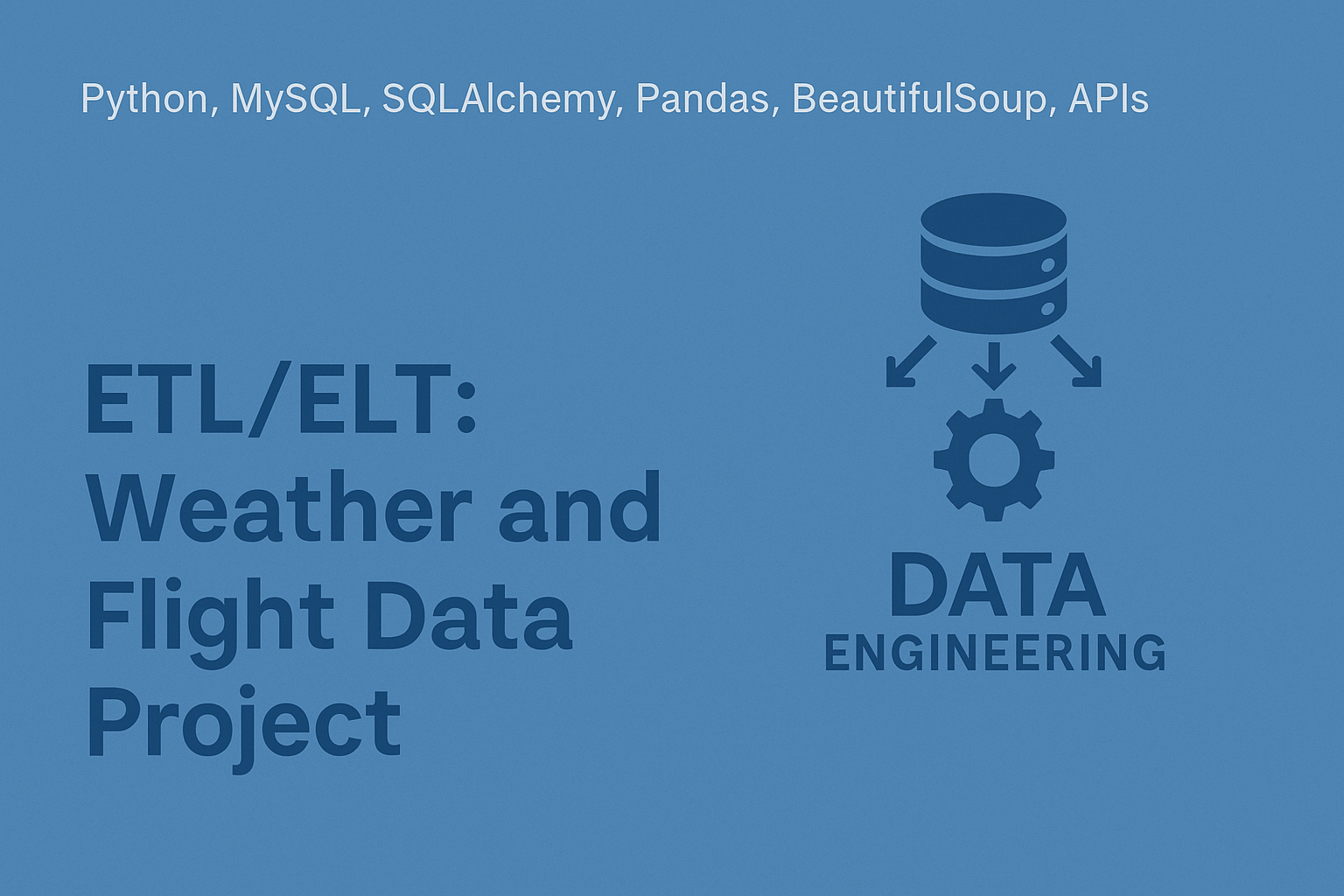
ETL pipeline on Google Cloud

ETL pipeline on Google Cloud

BigQuery and Cloud Functions pipeline with scheduling, retries and monitoring, containerised and deployed through CI. Built during my data science programme and kept as a working reference.

BigQuery Docker CI/CD

Also on GitHub: PIML physics-informed ML experiments · HiggsBosonML signal/background classification · Probabilistic-Machine-Learning Bayesian inference

Core strengths

Skills

Numerical methods and statistics from the physics side; tests, containers and CI from the engineering side. Everything I build I try to make runnable by someone who is not me.

Languages

English C1 · German B2 (C1 exam Dec 2026) · Hindi native

Scientific ML

Neural operators, physics-informed networks, custom training loops, autodiff, Bayesian hyperparameter search, uncertainty calibration.

PyTorch scikit-learn Optuna

Simulation & HPC

Monte Carlo transport in GEANT4, ODE and finite-volume solvers, parallelised data generation, GPU training on compute clusters.

C++ GEANT4 HDF5 CMake

Services & data

REST services, retrieval systems over graphs and vectors, SQL, async, packaging, load benchmarking.

FastAPI Flask Django Neo4j React/TS

Reproducibility

Git, GitHub Actions CI, pytest, Docker and Compose, Linux administration, NGINX, LaTeX. Google Cloud and BigQuery from my data science programme.

Docker GitHub Actions Linux GCP

Background

About

I am a physicist in Tübingen, finishing a doctorate on neural operator models — architectures that learn a solution operator rather than a single solution. The project was mine end to end: the classical solver, the parallelised data generation, the GPU training pipeline, the evaluation harness, and the analysis of where the method breaks.

Before that I spent four years in the LEGEND collaboration writing C++ Monte Carlo simulation, and alongside the doctorate I have worked in industry — a production retrieval-augmented generation system shipped and maintained, and a full-stack engineering role where I benchmarked two service architectures against each other to settle an architectural decision with numbers rather than opinion.

That mix is the point. Research code that nobody else can run is not finished, and production code that nobody can explain is not trustworthy. I try to work on both sides of that line.

Education & experience

since 2022
Doctoral candidate, Physics
University of Tübingen — neural operator models
2018–2021
M.Sc. Astro- & Particle Physics
University of Tübingen
2011–2013
M.Sc. Physics
Indian Institute of Technology (IIT) Delhi
2022–2023
Research Associate
LEGEND collaboration — GEANT4 simulation
2024–2025
Software Developer, AI & data systems
Production RAG system · full-stack engineering

Tübingen, Germany · open to research software & ML roles

Get in touch

Let's talk

Email is best. I am open to research software engineering, scientific computing and machine learning research roles, and happy to talk about neural operators with anyone who will listen.